
PraxisPoetica V. Step 2. The Pivotal Character Who Must Win By Any Means Necessary
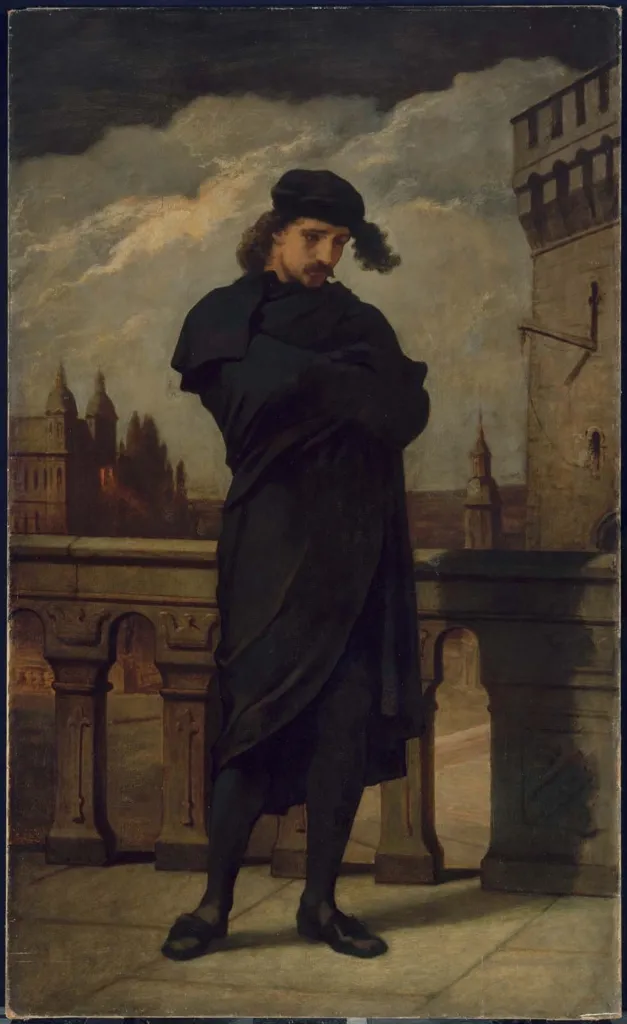

There are many things about the Pivotal Character that make us realize we’re already on full-blown auto process mind jump with this novel (often this protagonist is the inspiration for the whole thing):
Rolling right out of the first part of the premise:character.
Section titled “Rolling right out of the first part of the premise:character.”- Without even trying your mind is automatically working on a number of things, rolling out more.
- OK, this person is really significant, is a mover. What are they like physically? Age? Color hair? Face?
- Psychologically?
- And where does Aaron fit in socially? What social class? Is he working or studying,
- What hegemony is he subject to? Is his family a member of a cult? A revolutionary organization? Is it pro-hegemony or anti-hegemony? Submissive or independent? Or, interestingly enough for Aaron as the novel begins 😄 BOTH?
- And, how did he get to be the way he is?
- Oooh, let’s dig down and see how much we know about Aaron.
- Scenes come flashing out, stick them somewhere (hopefully in the same folder)
- Choose a tool according to your likes and habits, so you’ll have a single source of truth home for the novel; a PKM (personal knowledge manager), a folder, stick it on the wall, whatever.
Rolling right out of the second part of the premise: conflict
Section titled “Rolling right out of the second part of the premise: conflict”- And what does Aaron want?
- Now, he’s a mover… but, what’s holding him back? What’s stopping Aaron from getting what he wants?
- Externally, in his family, or in the world outside?
- Internally, some mistaken conviction or habit or way of dealing with things he acquired along the way.
- When did he get like that?
- What situation is going to bring the internal and external conflicts to a fever pitch, something Aaron can no longer ignore
Rolling right out of the third part of the premise: resolution
Section titled “Rolling right out of the third part of the premise: resolution”- Flashes of conflict as it grows in the story
- Assuming the protagonist is going to fight it out right to the finish, we will get (sometimes varying) flashes of how things are going to end, in victory, and then how this will land in place for an ongoing resolution built for the future.
Flash mode in the Novel Universe
Section titled “Flash mode in the Novel Universe”Flash, flash, flash, cooking, washing the dishes, out walking, we get these flashes all the time. rough versions of scenes, a little synopsis, rolling right out of the character + conflict + resolution at any point and on any level. Perhaps a short and sweet synopsis; perhaps a long and rough synopsis; or character sketches, or a flash of a how a sequence of scenes might go.
👉 breakthrough: But while these flashes form the backbone of our uninhibited creative process and that must NEVER be inhibited or invaded by the formal logic abstract or mundane or commercial, or any other invasions of any kind; we must store them objectively so they don’t get lost and we know where to find them. In one place, in a single source of truth. We must have it all at our fingertips and organize everything we are discovering as artifacts, placed in a digital or physical binder, with tabs for everything.
So we know where our arms and legs are, even our mind, as we’re writing.
If we don’t do that we’ll be spending countless hours searching for that rough scene sketch, or that flash of dialog or any kind of idea whatsoever on any structural level, and in any zoom mode: beat, scene, scene sequence, chapter, or birds’ eye view of the cause and effect trajectory between scenes just to make sure we have no superfluous stuff, or timelines (for the story, for a characters’ whole life (boring for readers but pure honey for us writers), etc., etc.).
Somethin’ is happening, but we don’t know what it is…
Section titled “Somethin’ is happening, but we don’t know what it is…”Ya see, what we’re learning at this point (and it may have something to do with the famous Act II writers’ block, like mine now) is that architecting a novel (for that is what it is) involves having a clear idea of all its essential story structure elements, from beat to scene to sequence to chapter to how it begins, how it midpoints, how it ends, for each of the characters, which fit in, each with their story arcs (storylines threading through the novel) and the protagonist’s, with history’s storyline, and all the other storylines, hegemonies and anti-hegemonies at play, in a single, solitary, and above all unified work of art.
And our writing process and its elements (premise, pivotal character ) are joyously arming us up, and we are joyously applying and revising, applying and revising all of them at the same time on any number of story elements, applying, creating and revising the results on any number of multi-threaded levels at the same time, to birth the unified work of art.
Yeah, what’s going on is that we’ve got two brains, or actually maybe a whole team going on. We’re not all Ibsen, marvelled at by Lajos Egri as he watched the great writer orchestrate his characters (never mind we’ll talk about that later); or maybe Ibsen knew what he was talking about when he said he needed to be alone when he was writing.
Crossroads: How would Lajos Egri do it, What’s Step 3?
Section titled “Crossroads: How would Lajos Egri do it, What’s Step 3?”There is no Step 3. Step 2 is that last obvious step that grows inexorably and naturally out of the Step 1 Premise right into the quest for the Pivotal Character, where we are now.
Lajos Egri starts out Chapter 11 of Part IV General of The Art of Dramatic Writing, called “When you write a play” with everything I’ve been trying to explain:
Be sure to formulate a premise.
Your next step will be to choose the pivotal character, who will force the conflict. If your premise happens to be “Jealousy destroys itself and the object of its love,” the man or the woman who will be jealous should be inherent in your premise. The pivotal character must be a person who will go all the way to avenge his injury, whether it be real or imaginary.
The next step will be to line up the other characters. But these characters have to be orchestrated.
Once we get there we already have characters of all kinds, things that happen, reactions of the characters, what the protagonist’s going through… already bursting into galaxies and stars in various corners of our minds.
But orchestration (we’ll get to that in another note, it doesn’t matter now) is NOT a step 3. It turns our that orchestration of characters, making sure they all fit together in conflict, dialectically, and that they won’t wander off in the middle of the play, as the Maestro says somewhere; is not a “Step 3”. That’s a process tool you have to be using no matter what you’re doing, and bear in mind at all times, and apply on all levels: beat, scene, sequence, chapter, part, whole novel, back down to character arcs and storylines, timelines and devils. As is the case, we should try to understand also,with Premise (in this scene I’m writing, is the Premise being addressed?) and Pivotal Character.
👉 breakthrough: Lajos Egri hands us a delicious writing process on a plate, but we find ourselves using that same dialectical process on many different story structure levels, often at the same time. And we can only understand the process as we’re using it.
Some people try to solve this problem with a simplification, by saying:
—OK, what’s your genre? Choose one and then mechanically apply any one of 21 (not 22, not 20) plot point maps. One for Romantic Fantasy, one for Science Fiction, one for historical fiction, one for semi-autobiography. Or just use Save the Cat.
👉 breakthrough: But people like Lajos Egri and Lisa Cron and Jennie Nash help us by explaining that story should be character-driven, not plot driven. I support that. We stand firmly against what Aristotle says in Poetics, and affirm that the cause and effect trajectory is not “then what happened? then what happened? then what happened…?” (and then this happens and then this happens, and then this happens); but rather “this happens; the protagonist or other character reacts to that, decides a course of action, acts, as a consequence this situation is the outcome and because of that we hop on over to this other scene.
So Lajos Egri explains all that tremendously well, he offers us a wonderful process.
But he doesn’t tell us how to use that. For decades he taught students (Woody Allen was one) how to, and even though he taught students a few blocks away from where I was living when I went to UCLA in the sixties (ahem), I didn’t have a clue then. And he died in 1967.
But people like Lisa Cron and Jennie Nash DO give us some great ideas on how to move foreword in ways totally compatible with Lajos Egri’s approach (when not based directly upon it). While providing very helpful step-by-step scenarios on how to use that process. Enough to get us started, even to write our own as we write more and more novels.
So what I’ve been doing for a couple of years now, is answering the question “How would I actually put Lajos Egri’s threaded, dialectical writing process to work with me on the novel I’m writing right now?
👉 breakthrough: And my conclusion is: Seeing how Lajos Egri’s approach has influenced many writing process resources (online resources, articles, courses, books, etc.), I will glean compatible iterative and incremental processes and corresponding artifacts that writing process experts like E.M. Forster, Lisa Cron, Jennie Nash, etc. have to offer.
So, glean what? Let’s cover Step 2, Pivotal Character
Iterative and Incremental Process and Artifacts as stem cells for our brains on fire: Pivotal Character
Section titled “Iterative and Incremental Process and Artifacts as stem cells for our brains on fire: Pivotal Character”Well, for this novel, I’ve chosen to base myself, in terms of storage for artifacts, on Lisa Cron’s Story Genius approach to prepping for and completing the First Draft (See the template for Scrivener by Gwen Hernandez: Using Scrivener with Story Genius).
Plottr, and Campfire before it as well as The Novel Factory, has also been very active recently with a singularly in-depth set of templates for Story Genius: Story Genius Scene Worksheet: Make Every Scene Meaningful and continuing today even more so with a series of videos and playlists on their Youtube channel.
I consider Story Genius brilliantly and completely compatible with Egri’s process, up to and including the completion of a First Draft. (If you disregard the brief sidetracks into “Brain Science” reductionism (as opposed to seeing the protagonist and/or reader in terms of hegemony and counter-hegemony, for example)).
For revision purposes, I would recommend Alice Sudlow’s approach to editor outlining and revision on a scene, sequence, chapter and complete novel level. See these two articles, for example, on her website:
- The 6 Essential Elements of Every Novel, Act, and Scene
- Value Shifts: How to Craft Compelling Change in Every Story (Value Shifts are called Transition by Lajos Egri, and we will be dealing with conflict development (in both scenes and in the work as a whole) in a later Note).
👉 breakthrough: Here is an outline of the steps and artifacts we need in order to meet the goals of this Note, allowing us to discover The Pivotal Character Who Must Win By Any Means Necessary
- Step 1: Premise
Inspiration- “The first pinprick”, “spark”, be it character, premise ideas, or situations
Motivation- Why do you care? Where do you stand? How far do you want to take it?
Premise- We’ll stick with Egri’s Character + Conflict + Resolution rather than other looser, less dynamic forms; for this novel anyway; everyone do what they prefer (that goes for everything).
Single paragraph conflict synopsis- Lisa Cron calls it a
What If?: a situation based crossroads challenging the protagonist - Other craft writers speak of “Logline”, which we are mentioning in terms of writing process, and not in terms of commercial elevator pitches, jacket blurbs, etc. (which have their own needs). See Loglines Explained: What They Are and How to Write One.
- Lisa Cron calls it a
- See our earlier Note PraxisPoetica IV. Step 1. The Premise that Impels the Writer and Drives the Story
- We won’t detail this whole outline for Step 1 (Premise) and Step 2 (Pivotal Character) but in this link, you’ll find an explanation of the premise of this novel and how it is a micro-synopsis following the form Character + Conflict (+ Midpoint) + Resolution.
-
If you ain’t part of the solution, you part of the problem, you dig? There’s no more middle ground. (—Eldrige Cleaver, quoted in the Chicago Tribune editorial of September, 1968)
Character- You
- i.e. Everyman
- You
Conflict- *If you ain’t part of the solution, you part of the problem,
Midpoint(self-realization and/or class consciousness genesis moment occuring midway through the novel)- you dig?
Resolution- There’s no more middle ground
- Step 2: Pivotal Character (the main step being considered in this Note)
- The Who? Whose Life Will You Utterly Upend?
-
Even if your What If came equipped with a protagonist, it’s time to transform that person from a generic “anyone” plunked in a dicey situation, into a specific someone. (Lisa Cron)
Character sketch. A few free form paragraphs that outlines who the character is.- Characteristics that leap out, free-form, can be completed, iteratively and incrementally, in terms of Lajos Egri’s concept of full three-dimensional characters:
- Physical characteristics
- Psychological characteristics
- Family
- Social characteristics
- World (as a student, as a worker, as a capitalist, in favor or against change)
- This is where world-building comes in if you are writing a Fantasy fiction novel
- World (as a student, as a worker, as a capitalist, in favor or against change)
- The Why Why, Exactly, Does Your Protagonist Care?
Goal and Misbelief Summary(Protagonist’s internal conflict)- Answering the questions
- What does your protagonist want?
- What fear or bad habit or externally imposed conviction is preventing the protagonist from reaching that goal?
- What does the protagonist think the very worst thing that could happen might be? What are the stakes?
-
Try defining your protagonist’s misbelief. As concisely as you can, write down what that character wants, and what the fear is that’s keeping him or her from achieving it.
-
Dig deep, because you are going to capture the conflict—the yin and the yang of the misbelief—that is going to drive your whole novel. (Lisa Cron)
- The Worldview Digging deeper into the protagonist’s internal struggle
Origin Scene Sketch(preview the questions and answers below before actually writing the sketch)-
Can you envision the moment in your protagonist’s life when his misbelief took root? Perhaps you have a vague idea, and that’s fine. Take a minute and sketch it out… in just a simple paragraph, freeform.
-
Origin Scene Questions and Answers- Lisa Cron gives us four questions can help us think about the Pivotal Character we may hardly know yet, even if you’re writing a semi-autobiography (ahem):
- What does my protagonist go into the scene believing?
- Why does she believe it?
- What is my protagonist’s goal in the scene?
- What does my protagonist expect will happen in this scene?
- As an added bonus
-
These are the same questions you’ll ask yourself when writing—or envisioning—any scene.
-
- OK, now sketch the scene.
- Lisa Cron gives us four questions can help us think about the Pivotal Character we may hardly know yet, even if you’re writing a semi-autobiography (ahem):
Origin SceneNow write the scene! 💯 We finally get to write a scene!!! 🔥- Again, freeform, we have plenty of time to review, revise, etc.
-
The origin scene will chronicle a single event. It will be specific. You will need to set the place, the time, the context. Don’t simply chronicle what happens externally; put us in your story’s command center by letting us know what your protagonist is thinking as he reacts, internally, to what happens and to what other people say. Often, what he’s thinking and what he’s saying out loud will be two very different things. That is the point. (Lisa Cron)
- The
Origin Scenein this novel, Wandering Into The Promised Land, is in Part 2. Already up as you read this. Can you guess which one it is? - That’s right, the first one! In the course of a scene sequence in which Aaron, the protagonist, is wondering how best to answer the question put to him by the Rabbi at the admissions office when he finally manages to get to New York: Why Do you Want to Be a Rabbi?
- What Next? The Beauty of Cause And Effect
- Write three
Turning Point Scenescreating enough intensity so that the very next scene will be able to have all the intensity it needs to be capable of supporting the role ofStarting scene, allowing us to begin our novelin medias res. - First, identfy the three
Turning Points(called “rising and/or foreshadowing conflict” by our Maestro). Then write the scenes, 3-5 scenes. - Well, everything that Lisa Cron offers is very effective in terms of implementing Lajos Egri’s iterative and incremental writing process. But this particularly item scores in several ways in that sense.
- Cause and Effect is key to the Dialectical approach to story construction defended by the Maestro.
- The example
Turning Point Sceneswe are going to write now (💯 yes we get to write mo’ scenes now! 🔥) form a defining part of the approach of “starting to write your novel in the middle of the story”; Lisa Cron calls it in media res.- We have already explained the coincidences existing between Lisa Cron’s book Story Genius and the radical approach Lajos Egri took more than half a century ago: in a previous note
- Among these, the three
Turning Point Scenescapable of building up enough tension to arrive, via cause and effect right at the door of the novel’s building up enough tension to arrive, via cause and effect right at the door of the novel’s opening sceneopening scene(which Egri refers to as Inciting incident)
-
Your goal is to zero in on three
Turning Point Scenesthat will yield the most story-specific info, the most potent grist for the mill, so that you can, indeed, begin your novel in medias res. You may come up with many more than three, some of which you’ll dismiss out of hand, and others that you may decide to explore in addition to the three you’ll pick. That’s fine. Just remember that the goal is to have at least three scenes so you can begin to see the escalating arc of your story. Sketch them out… (Lisa Cron)
- Write three
- The When
- Brainstorming about where exactly to start the novel. At what point must the protagonist be so affected by an external problem that he has literally no choice but to take action (Inciting Incident), to kick off and motorize a cause and effect trajectory that will prove the premise after transitioning all along the cause and effect story trajectory that leads to the ending of the novel.
Inciting Incident General Scenarios- Sketch out a single paragraph comparing all possible scenarios you have been thinking about.
Inciting Incident Candidate List- Extract from the
Inciting Incident General Scenariosa more succinctInciting Incident Candidate Listof problems: potential external events geared to incite the inner struggle and action-oriented reaction worthy of triggering the novel’s cause and effect trajectory; worthy of effectively starting the novel. With the protagonist’s backstory behind us, this will allow us to start the novel. in media res. -
The first question to ask about your protagonist’s predicament is, what unavoidable external change will catapult my protagonist into the fray, triggering her internal battle? In other words, what threshold is my protagonist standing on the brink of, whether she knows it or not? Who (or what) is taking aim at her little boat?
-
Do a little 💯 free writing 🔥 about your intended plot. Then extract from that a list of as many ideas for your novel’s main problem as possible: the ones you already had a notion about, perhaps new ones that are just occurring to you now, even ones that seem far-fetched.
-
Don’t worry about sorting them out; the goal is simply to identify as many as you can. Sure, some of them will ultimately be discarded, but it’s not just the main story problem you’re identifying here; it’s also secondary problems that it will bring to the surface and drive forward. So none of this effort will be wasted. (Lisa Cront)
- Extract from the
Inciting Incident Candidate Test 1. Can the Problem Sustain the Entire Novel from the First Page to the Last?- Finding the best candidate for the novel’s inciting incident. Thin out the
Inciting Incident Candidate Listmy crossing out any problem that doesn’t pass all three questions. Test 1 Question 1. Can the problem build?-
The problem that kicks into gear on page one must have the stamina to play through your entire novel, sparking the third rail and picking up speed as it thunders forward. That’s a tall order, and why you can’t pick just any old external problem.
- Third Rail: Lisa Cron’s term for the protagonist’s internal struggle.
-
Test 1 Question 2. Is there a real-world, specific, impending consequence that this escalating problem will give my protagonist no choice but to face?Test 1 Question 3. Is there a clear-cut deadline, a ticking clock counting down to that consequence?
- Finding the best candidate for the novel’s inciting incident. Thin out the
Inciting Incident Candidate Test 2. Is the Problem Capable of Forcing Your Protagonist to Make the Inner Change That Your Novel Is Actually About?- Is the problem capable of forcing the Protagonist to spring into action of the kind capable of motorizing the cause and effect trajectory with sufficient conviction and militancy such that he may be able to prove the Premise in the end?
Test 2 Question 1. Will the problem’s impending consequence force my protagonist to struggle with her misbelief?Test 2 Question 2. Regardless of whether or not my protagonist achieves his goal, will the approaching consequence cost him something big—emotionally speaking, that is?
- So When Does Your Novel Begin? The Story Keeps on
Tick-ing, in a rising action of single paragraphTickscene synopsis instances until you can feel the novel is beginning with that last tick.-
We’ve finally arrived at the seminal question: When does your novel begin? What, specifically, will happen to start the chain reaction that will cause everything to happen? What will trigger your protagonist’s decision to take that first step out of her comfort zone?
-
It’s simply a matter of zeroing in on that seminal tick. And just like in real life, it’s never the first tick. You rarely even notice the first tick as anything out of the ordinary. It’s not until the fourth or fifth tick that the sound breaks into your consciousness and it dawns on you that something just might be wrong—and by then, the problem has usually grown considerably.
-
Your goal is to find the tick that catapults your protagonist into unavoidable action. You’ll know it when you get there, because you’ll feel a strong tug of forward momentum—a sense that your protagonist must act and must act now. Keep the clock ticking until you get there. Don’t be afraid to try this again and again until you get a tick that has everything it needs—the overarching plot problem, the main ticking clock, the third rail. (Lisa Cron)
-
Objective: Forming the material base, in actual notes, sketches, ideas, incarnations, for the actual growth of the story, then, as it evolves into a firm story structure, a blueprint, a solid base for the writing of the whole work:
If Step 1 is the Premise, a crystal, a thumbnail sketch of the novel in as little as three words, but at least, in a single sentence; then Step 2 is finding that person who will live this through and force the characters and the whole world into action, in order to win and prove that premise, by any means necessary (or at least, for what passes for “by any means necessary” for the protagonist).
With the Pre-Blueprint Story Structure groundwork completed above (Iterative and Incremental Process and Artifacts as stem cells for our brains on fire: Pivotal Character) with all step-by-step process artifacts covered, onwards now to Step 3: The Novel Blueprint, including the self-checking Story Outline and Manuscript!
© Victor Opas Kane. Some rights reserved. CC BY-NC-ND 4.0 International License