Skip to content

Wandering Into The Promised Land

4 posts with the tag “Wandering Into The Promised Land”

PraxisPoetica VIII. Step 5. Let's roll out the whole flow and Kanban Board of Process and Artifacts from the Premise
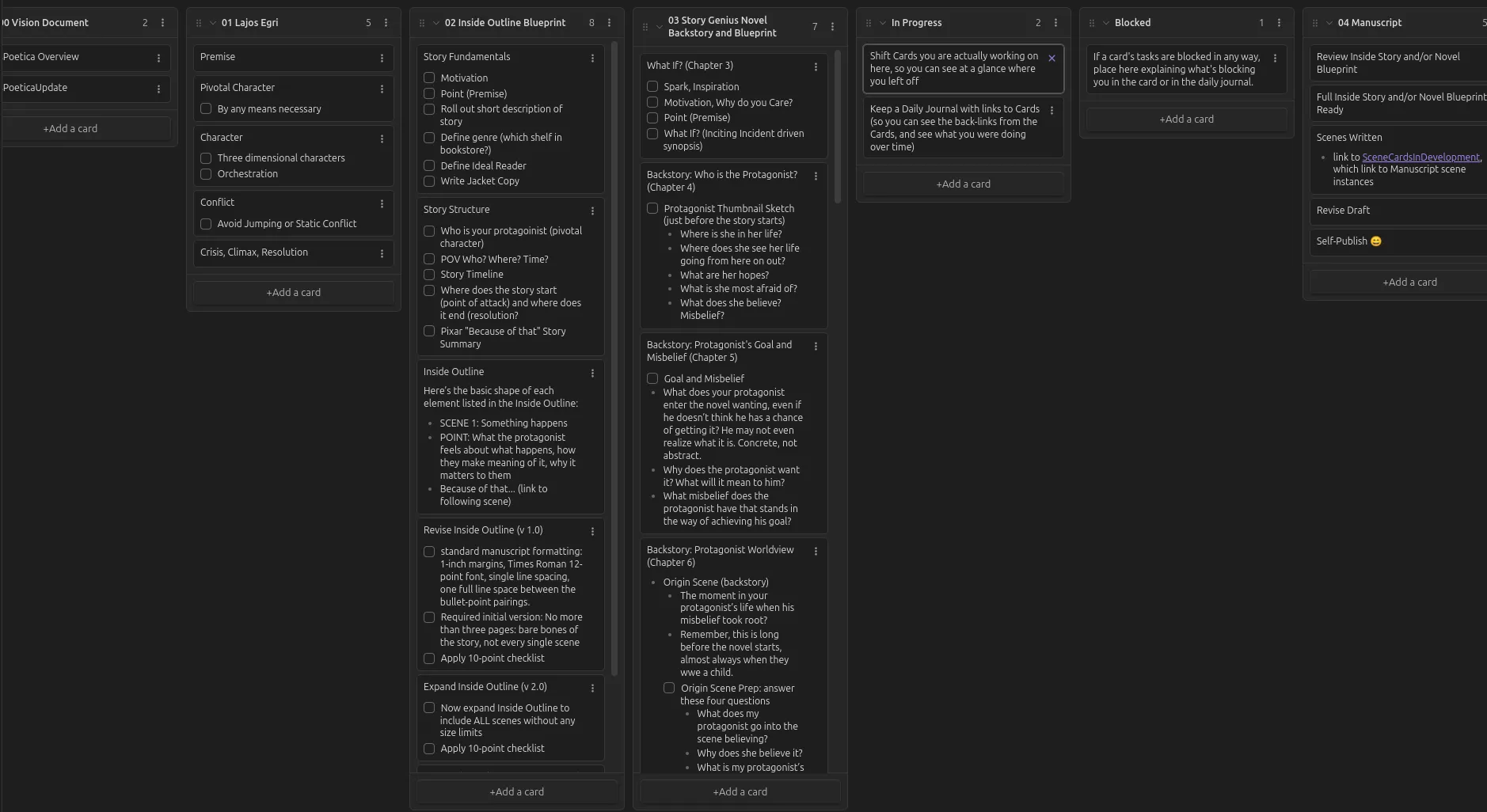
PraxisPoetica Vision Document. Rolling out the process and artifacts from the Premise; Kanban by v. o. kapelman, this work licensed under CC BY-NC-SA 4.0 <https://creativecommons.org/licenses/by-nc-sa/4.0/>

Yep. We forgot the Vision Document. And, more importantly, we forgot the flow, the rolling out from the Premise through the whole process. We forgot the benefits of the view from 30,000 feet. In both senses of the words. Last night I had, figuratively speaking, all of the digital artifacts I’ve already completed (well, except the manuscript) spread out on the floor and there seemed to be repetitions, conflicts, maybe superfluous elements… hmmm, what was that about conflict leading to change?
PraxisPoetica VII. Step 4. Transition. From Premise to Opening and Ending Scene

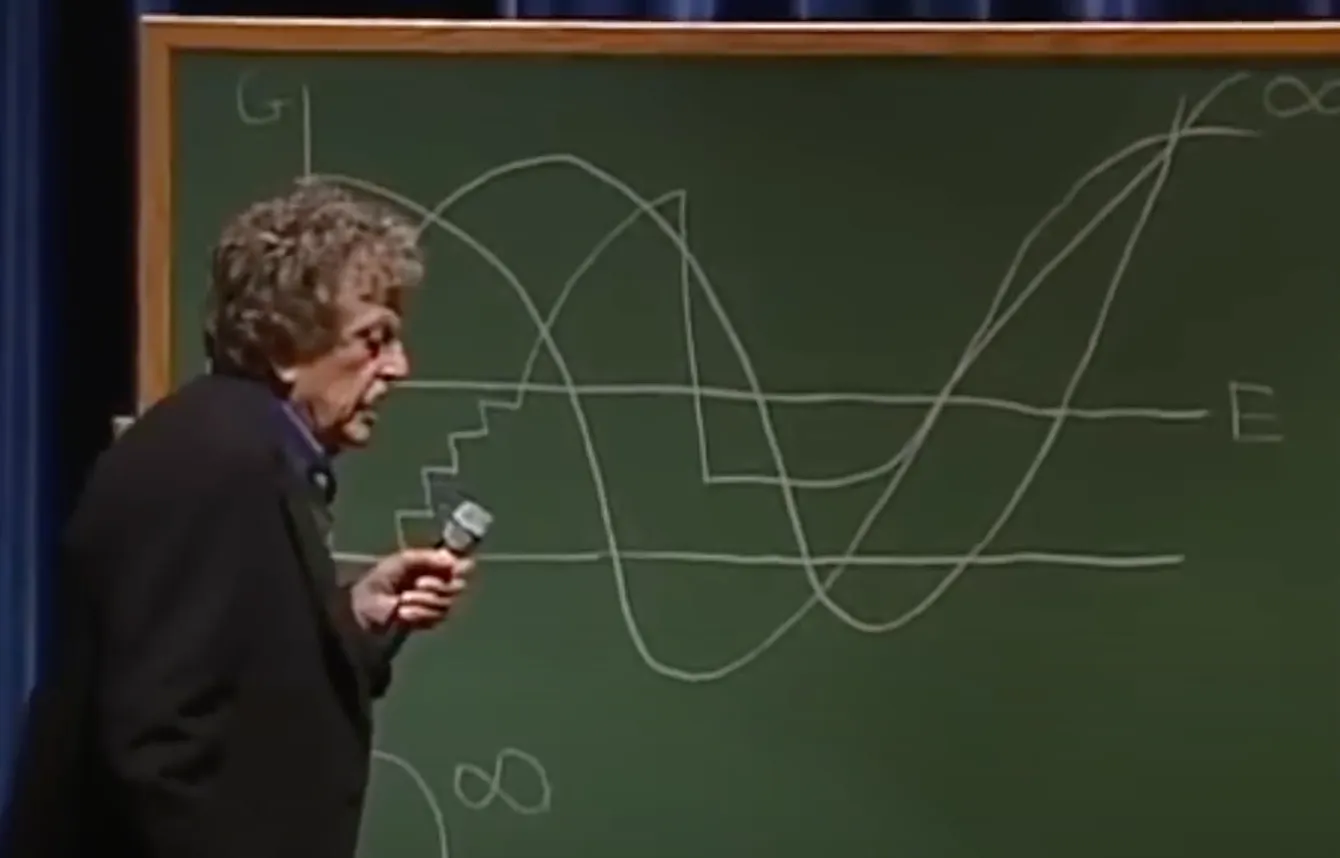
fair use from  Kurt Vonnegut, Shape of Stories (subtitulos castellano) https://youtu.be/GOGru_4z1Vc?si=QMe26sjiRRTCaVdD
  • See YouTube Video - Kurt Vonnegut, Shape of Stories (subtitulos castellano)(thanks for the screen capture!)
  • Kurt Vonnegut’s rejected master’s thesis, The Shape of Stories is actually a major contribution to our understanding of how to see extremely helpful X-Rays of the plot of the novel we are writing.
  • As long as we see each plot point as this famous author saw them: a plot point, as what happens; but also a because of that effect on the protagonist.
  • Because when we talk about the ending scene, we are not talking about what happens in the end. It isn’t that there are merely a “string of external events” ending the plot. The question is how the Protagonist is affected by the events, empowered to get what they have been wanting, willing to make the change, by any means necessary.

PraxisPoetica VI. Step 3. The Novel Blueprint

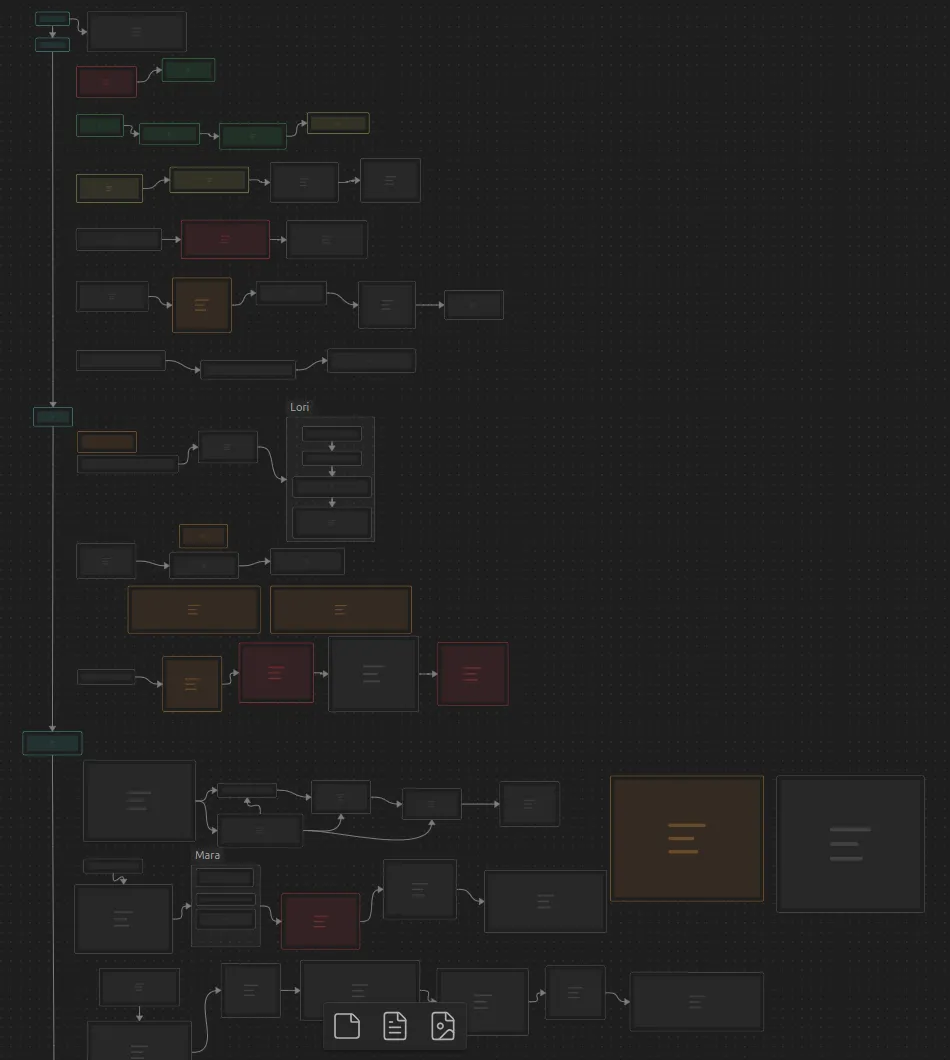
View of scene cards in development for Wandering into the Promised Land (Obsidian canvas); Diagram by v. o. kapelman, this work licensed under CC BY-NC-SA 4.0 <https://creativecommons.org/licenses/by-nc-sa/4.0/>

So what exactly is a novel blueprint, and how does it help you create a plot that touches on the third rail? I thought you’d never ask.

In a nutshell: A novel blueprint is a scene-by-scene progression of your external plot, as driven by the internal struggle each event triggers in your protagonist. (Lisa Cron, Story Genius, Chapter 9)

PraxisPoetica V. Step 2. The Pivotal Character Who Must Win By Any Means Necessary

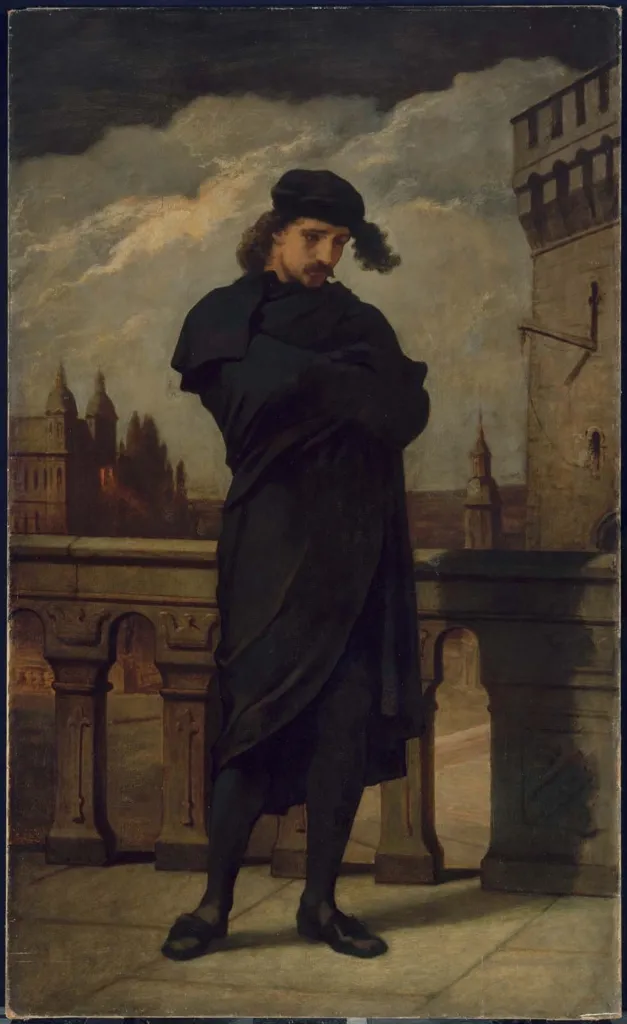
Attribution William Morris Hunt, Public domain, via Wikimedia Commons

There are many things about the Pivotal Character that make us realize we’re already on full-blown auto process mind jump with this novel (often this protagonist is the inspiration for the whole thing):

Rolling right out of the first part of the premise:character.

Section titled “Rolling right out of the first part of the premise:character.”
  • Without even trying your mind is automatically working on a number of things, rolling out more.
    • OK, this person is really significant, is a mover. What are they like physically? Age? Color hair? Face?
    • Psychologically?
    • And where does Aaron fit in socially? What social class? Is he working or studying,
    • What hegemony is he subject to? Is his family a member of a cult? A revolutionary organization? Is it pro-hegemony or anti-hegemony? Submissive or independent? Or, interestingly enough for Aaron as the novel begins 😄 BOTH?

© 2026  Victor Opas Kane. Some rights reserved. CC BY-NC-ND 4.0 International License