
PraxisPoetica VII. Step 4. Transition. From Premise to Opening and Ending Scene
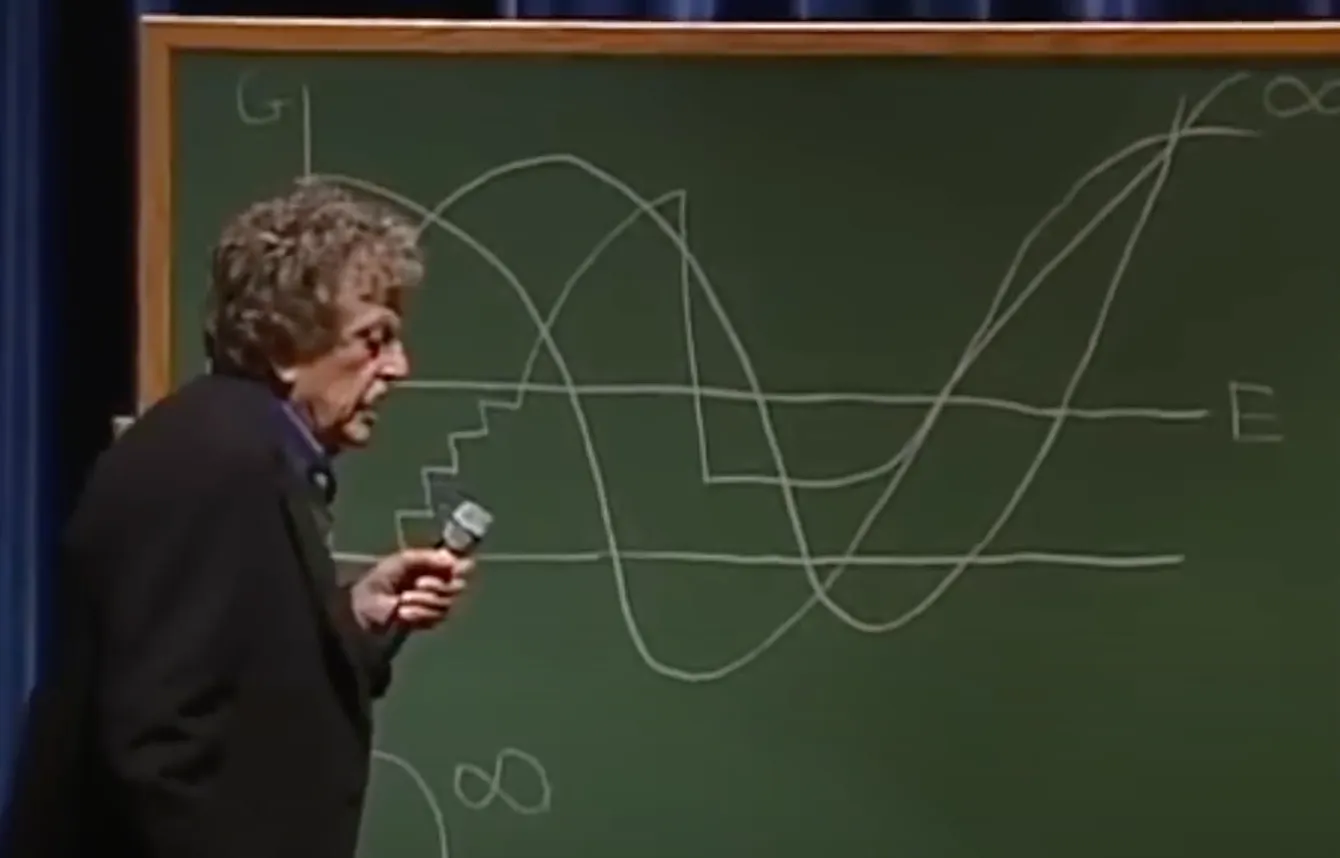

- See YouTube Video - Kurt Vonnegut, Shape of Stories (subtitulos castellano)(thanks for the screen capture!)
- Kurt Vonnegut’s rejected master’s thesis, The Shape of Stories is actually a major contribution to our understanding of how to see extremely helpful X-Rays of the plot of the novel we are writing.
- As long as we see each plot point as this famous author saw them: a plot point, as what happens; but also a
because of thateffect on the protagonist. - Because when we talk about the ending scene, we are not talking about what happens in the end. It isn’t that there are merely a “string of external events” ending the plot. The question is how the Protagonist is affected by the events, empowered to get what they have been wanting, willing to make the change, by any means necessary.
Lisa Cron puts Starting Scene and Ending Scene first
Section titled “Lisa Cron puts Starting Scene and Ending Scene first”-
We know how the journey from the first scene to the ending changed their view of the world and of themselves, and therefore how they feel about what’s happening now, as the story ends.
-
The ending scene is about what the final chain of events has taught the Protagonist
-
…as her misbelief finally bites the dust and she sees the world with new eyes… [the revelation] Often, it’s what allows her to finally solve the external problem, or make peace with it.
-
Here’s the secret [to optimizing the revelation]: The point is not that she makes the change, it’s how she gets there—internally—that counts.
Lajos Egri puts Starting Scene and Ending first
Section titled “Lajos Egri puts Starting Scene and Ending first”Lajos Egri - Premise as a Thumbnail Synopsis motorized by the Author’s Conviction
Section titled “Lajos Egri - Premise as a Thumbnail Synopsis motorized by the Author’s Conviction”- At the risk of repeating ourselves, let’s go back to the very first chapter of The Art of Dramatic Writing, “Premise”:
every good premise is composed of three parts, each of which is essential to a good play. Let us examine “Frugality leads to waste.” The first part of this premise suggests character—a frugal character. The second part, “leads to” suggests conflict, and the third part, “waste” suggests the end of the play.
Let us see if this is so. “Frugality leads to waste.” The premise suggests a frugal person who, in his eagerness to save his money, refuses to pay his taxes. This act necessarily evokes a counteraction—conflict—from the state, and the frugal person is forced to pay triple the original amount. “Frugality” then, suggests character; “leads to” suggests conflict; “waste” suggests the end of the play.
A good premise is a thumbnail synopsis of your play.
Here are a few other premises
- Bitterness leads to false gaiety.
- Foolish generosity leads to poverty.
- Honesty defeats duplicity.
- Heedlessness destroys friendship.
- Ill-temper leads to isolation.
Although these are only flat statements, they contain all that is required of a well-constructed premise: character, conflict, and conclusion. What is wrong, then? What is missing?
The author’s conviction is missing. Until he takes sides, there is no play. Only when he champions one side of the issue does the premise spring to life. Does egotism lead to loss o£ friends? Which side will you take? We, the readers or spectators of your play, do not necessarily agree with your conviction. Through your play you must therefore prove to us the validity of your contention.
Lajos Egri and Transition
Section titled “Lajos Egri and Transition”- Lajos Egri delves very deeply into this question. And it’s all about the growth and transition of the pivotal character from start to finish of the story. It’s about how the transition can never simply be a jump from, say, hate to love; without there being a good measure of realistic, natural, intermediate changes.
- Each change is a thesis in conflict with an antithesis until there is a quantitative rise into crisis, leading to a qualitative change, which becomes the synthesis, the resolution.
- How to make sure the transition is a clear chain of cause-and-effect scenes leading to not only plot results but also changes in the protagonist via a realization that follows the consequences of the action of each scene.
This has to be rising or foreshadowing and smooth and without any excessively sudden jumps that would be unnatural or would be without any kind of logic or explanation
Neither should it be static, that is, without any dialectical (anti-formal logic) reason, lacking the thesis, antithesis and synthesis process which always marks true change.
Example from Lajos Egri:
Let us suppose that a character is going to travel from love to hate. Let us assume that there are nine emotional steps between the two poles of love and hate [in your play that might be different of course]:
- Love
- Disappointment
- Annoyance
- Irritation
- Disillusionment
- Indifference
- Disgust
- Anger
- Hate
If a character goes from No. 1 to No. 4, this constitutes jumping conflict. The author has neglected to show transitional steps Nos. 2 and 3. If the character then goes from No. 4 to No. 6, this is again jumping, because step No. 5 has been left out.
In real life a person may go through emotional changes in lightning-like fashion, so much so that his decision seems jumpy or hasty. This is not so. He has really gone through all the transitional steps, but so rapidly that it is not apparent. In fiction every step must be obvious and clearly shown.
When each character goes through each step, No. 1 to No. 10, then we have slowly rising conflict. Remember that each step must be higher than the succeeding one, just as each act gathers more momentum than the one before until the final curtain is reached.
This is true of transition within a single scene as well as for transition occurring gradually over a number of scenes, or the whole work.
Jennie Nash says Starting Scene and Ending Scene come first
Section titled “Jennie Nash says Starting Scene and Ending Scene come first”Jennie Nash rolling out the starting and ending scene from the premise
Section titled “Jennie Nash rolling out the starting and ending scene from the premise”In her book Blueprint for a Book, Jennie Nash says in Chapter 11 “Where Does the Story Start and Where Does It End?” something very similar to Lajos Egri’s approach (Jennie Nash also assumes that once the writer has the “point” clearly in their mind, they can visualize the ending and the opening scene):
Think of the opening and closing scenes of your novel as bookends for the protagonist’s arc of change. They are intimately connected to each other—one can’t exist without the other. It’s an inhale and an exhale. A call and a response. A problem and a resolution. Tying these two scenes together is the first step in creating narrative drive.
To get the connection between the two scenes right, go back and look at why you are writing this novel and the point [
Premise] you chose for it. If the point you want to make is apparent in the scene where the story will end, dial back to where that idea would naturally start. Here are some examples of what I mean:
- A book with the point cheaters never prosper is going to start with a cheater prospering.
- A book with the point technology is evil is going to start with technology seeming to be awesome.
This is a simplistic and blunt way of understanding the shape of your story, but let that be okay for now. Allow yourself to simplify. You will add nuance and complexity later.
- 👉 Notice that Jennie Nash’s point examples are extremely similar to Lajos Egri’s 👈
Jennie Nash rolling out a bird’s eye view of the cause-and-effect trajectory from the premise
Section titled “Jennie Nash rolling out a bird’s eye view of the cause-and-effect trajectory from the premise”Jennie Nash in Chapter 12 “The ‘Because of that’ Summary” takes a cue from both Lisa Cron and Pixar Studios to forge a summary with starting and ending scenes. Jennie Nash says:
In Story Genius, Lisa Cron calls the “because of that” concept the cause-and-effect trajectory (full disclosure: I am Lisa’s book coach). It’s an excellent term for the concept because it gets at the idea of linkage between actions and reactions—the narrative drive which is the arc of change of the protagonist.
Then she goes a step further than starting and ending scenes alone, on the basis of a set of story development rules recommended by Pixar Studios:
Those 22 Pixar Storytelling Rules we looked at back in Step 1 also have a “because of that” component in Rule #4:
Once upon a time there was ____.
Every day ____.
One day ____.
Because of that, ____.
Because of that, ____.
Until finally ____.
And ever since that day ____.
A Because of that is included for as many major scenes you wish to include in this initial summary of the novel.
One dayis the openinginciting incidentof the novelUntil finallyis the endingconflictandcrisisAnd ever since that dayis theresolutionorconclusion
In the following and final part of the book, this summary is taken a step further to what Jennie Nash calls The Inside Story, which is similar in structure and purpose to (and expressly compatible with) Lisa Cron’s Story Cards in Development as a bird’s eye view of the story cause-and-effect trajectory.
In Chapters 13 and 14, the Inside Outline is explained in detail.
-
[The
Inside Outlinemarries] the plot to the point [Premise] in every scene. It guarantees that whatever happens in your story—a mean girl snub, the race to stop a monster on the loose, the rise and fall of civilizations—will have personal meaning to the protagonist, because in every scene, you know why it matters to them, why they care. This is what makes the reader care at every turn and what adds up to a story they can become invested in.
Very similar to the Lisa Cron Story Genius approach.
-
Another way to think of the Inside Outline equation is like this:
This is what happens + this is how the character feels about it and makes meaning from it = this is what happens as a result.and because of that links this scene with the next (Lisa Cron calls it the And so in her Scene Card approach, which is what I have been using for this novel).
We now count on all the process and artifacts required for the ongoing iterative and incremental building of the Novel Blueprint, whether using Jennie Nash’s Inside Outline or the compatible Story Blueprint as Story Cards in Development; or both (i.e. you could use the Inside Outline for an “overview” transition, and then the full set of cards for the complete journey). With every scene card in development (or the equivalent artifact corresponding to the approach you are using) linked to an equally iterative and incremental scene manuscript instance.
While in the previous note, I have outlined a Complete Set of All Blueprint Artifacts, I have purposely avoided outlining a mechanical “recipe” approach, purposely leaving an original set of alternatives for myself for each work of fiction, and for the reader so that they can pick and choose at will; or make their own.
© Victor Opas Kane. Some rights reserved. CC BY-NC-ND 4.0 International License