👉 Important note (2026-01-04): In an initial version I used an incorrect definition for Premise. That has now been corrected
Correct:
Character + Conflict + Resolution
Because when we say Premise is your whole work in a nutshell, that premise is a thumbnail synopsis of your work, we are talking about a full cause and effect trajectory, and not just any conflict leading to any of the crises with their particular climax and resolution instances.
Character + Crisis + Resolution
🙏 I made a mistake 😖 I stand corrected, sorry! 🙏
It’s the (not so) secret point, the whole point of writing the novel, nothing to do with marketing or how to get published.
For that we have jacket blurbs and, well, elevator pitches and so on, as needed.
But this is Step 1: right after we get the initial Spark, that indelible vision, explosion inside you, for writing the book.
What are the first steps we take to start to get it down, with keyboard, pencil, voice?
The inspiration may be:
- an idea
- a character
- a situation
- a strong emotion
- something you have read or heard
- something else that seems to constitute a good story idea
- some or all of the above
However: “No idea, and no situation, was ever strong enough to carry you through to its logical conclusion without a clear-cut premise.” (Lajos Egri, The Art of Dramatic Writing, I Premise). Yes, the phrase “clear-cut premise” is mentioned 14 times in the book, spread out evenly among all the steps in the full writing process, and yes, it’s core!
- Egri explains that all craft sources explain in one way or another that your work needs a premise. And just as the work is made of acts or parts, and they are made of chapters and scenes, and scenes are made of beats, all these units of story compose a fractal, each with their own points, each, that is, with their own premise. And we’re not talking about the point of a scene only as why it’s important to the protagonist (internal conflict). Neither are we talking about the “Alpha point” of a scene (the reason the scene is even there, in terms of the plot), or even the scene’s causal elements in terms of plot action, only. We’re talking about the point we are trying to prove in writing the novel, which includes all of this in a nutshell, which is amazing. We’re talking about the point that we are making.
- So what is it?
The seed from which the story grows. The premise is the thumbnail synopsis of the story or play you wish to write.
And it has three parts, all expressed as a single sentence:
Character + Conflict + Resolution
Magic!!! It’s like the famous Snowflake method most of us are already familiar with, but goes twenty times deeper and is hundreds of times more powerful!
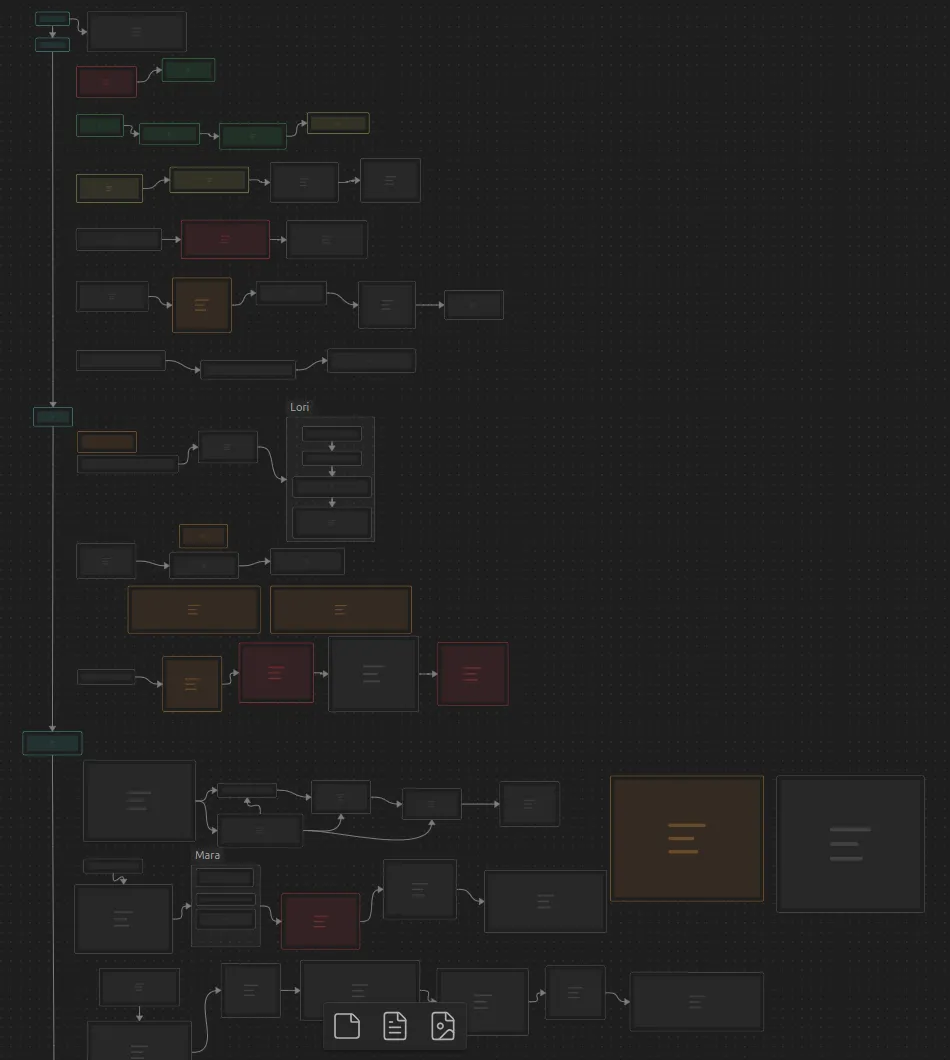
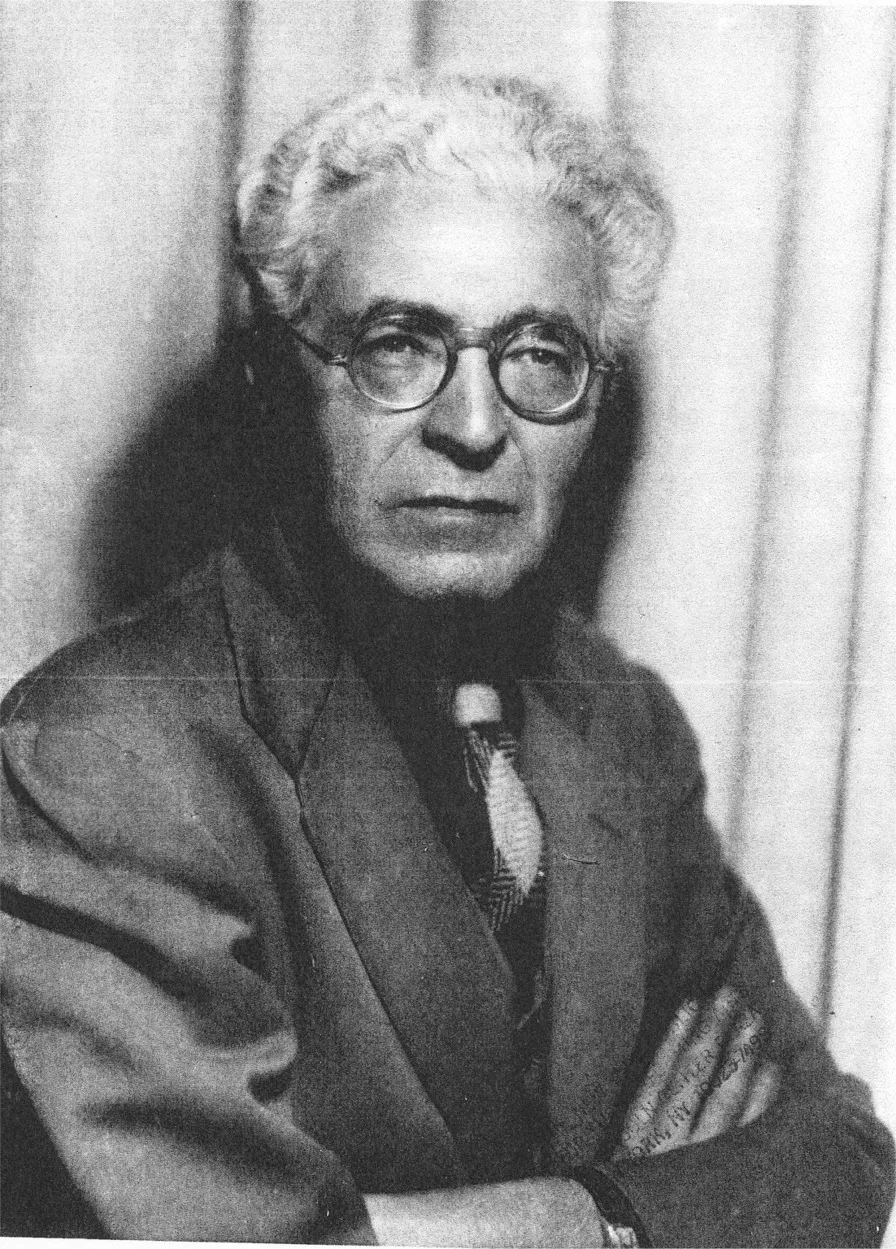
Character + Conflict + Resolution is the whole novel moving from start to finish, in a nutshell: Character as subject of the sentence, expressed as their deepest and most significant trait for the novel; Conflict as verb; and Resolution as the deepest expression of the state in the ending of the work. All to be fractally expressed in the novel, its Acts, Chapters, Scenes, Beats… (see image above, included as an attempt of mine to depict this). This is why the premise is also what you can always come back to when you feeling somewhat confused, or getting writer’s block or whatever. To see things clearly in your heart and mind again.
Now, the Maestro says that to discern your premise, no matter where your inspiration comes from, you must know:
- What you want to say?
- Why you want to say it?
- In what direction do you want to take it?
- How far you want to carry it
- What will be its final resolution?
- Premise is the crystallization (yeah, Egri uses that word) of your story: Character + Conflict + Resolution;
- Examples given:
- Shakespeare’s Romeo and Juliet: Great love defies even death
- Shakespeare’s King Lear: Blind trust leads to destruction
- Shakespeare’s Othello: Jealousy *destroys itself and the object of its love
- Ghosts, BY IBSEN: The sins of the fathers are visited on the children
- Sweet Bird of Youth, BY TENNESSEE WILLIAMS: Ruthless ambition leads to its own destruction
- Dead End, BY SIDNEY KINGSLEY: Poverty encourages crime
Isn’t that incredible! It’s moving, there’s always change inside us and outside us, everywhere! And this is just Step 1!
Lajos Egri, still in the chapter on Premise, quotes Moses L. Malevinsky in his work The Science of Playwrighting:
Emotion, or the elements in or of an emotion, constitute the basic things in life. Emotion is life. Life is emotion. Therefore emotion is drama. Drama is emotion.
Our Maestro answers him:
No emotion ever made, or ever will make, a good play if we do not know what kind of forces set emotion going. Emotion, to be sure, is as necessary to a play as barking to a dog.
Mr. Malevinsky’s contention is that if you accept his basic principle, emotion, your problem is solved. He gives you a list of basic emotions—desire, fear, pity, love, hate—any one of which, he says, is a sound base for your play. Perhaps. But it will never help you to write a good play, because it designates no goal. Love, hate, any basic emotion, is merely an emotion. It may revolve around itself, destroying, building—and getting nowhere.
A few other example premises listed by Lajos Egri to help us understand this concretely:
- Materialism conquers mysticism.
- Greed leads to loss of love
- Frugality leads to waste
- Bitterness leads to false gaiety.
- Foolish generosity leads to poverty.
- Honesty defeats duplicity.
- Heedlessness destroys friendship.
- Ill-temper leads to isolation.
- Materialism conquers mysticism.
- Coming of age, my coming of age, but not mine exactly, someone very much like me, coming of age as a Jew shortly after the Six Day War, as an Amerikan citizen right after the assassination of J.F. Kennedy; and the watching the movies “Loneliness of the Long Distance Runner” (working class fiction and film) and “Easy Rider”, “Blow Up”, etc. etc. etc. As a college graduate dealing with his parents’ pressure supposedly pushing in favor of his success. In terms of which careers to follow, which women to have relationships with (and which to break up with, right now, if not we’ll do it for you). What to think and what to know and what to do. And how to stop, yes, “dealing” (i.e. compromising) with all of this and how to step out and build a life of his own that he really wants to live, without compromise. What does he have to do to achieve that? So, the character. Living in the times, the historical conflicts, the assassinations, the genocide, the Cold War, Zionism as the purported path to salvation for Jews everywhere, Amerikanism touted as the best and richest place to grow up. But behind all of this, on all levels, there ever rests The Big Lie. What to do?
Oh wow! And…
- And What If? What if the Vietnam War grows in crescendo in the face of all this? And what if the draft starts? And what if draft exemptions are suspended for graduate students? Then what? If?
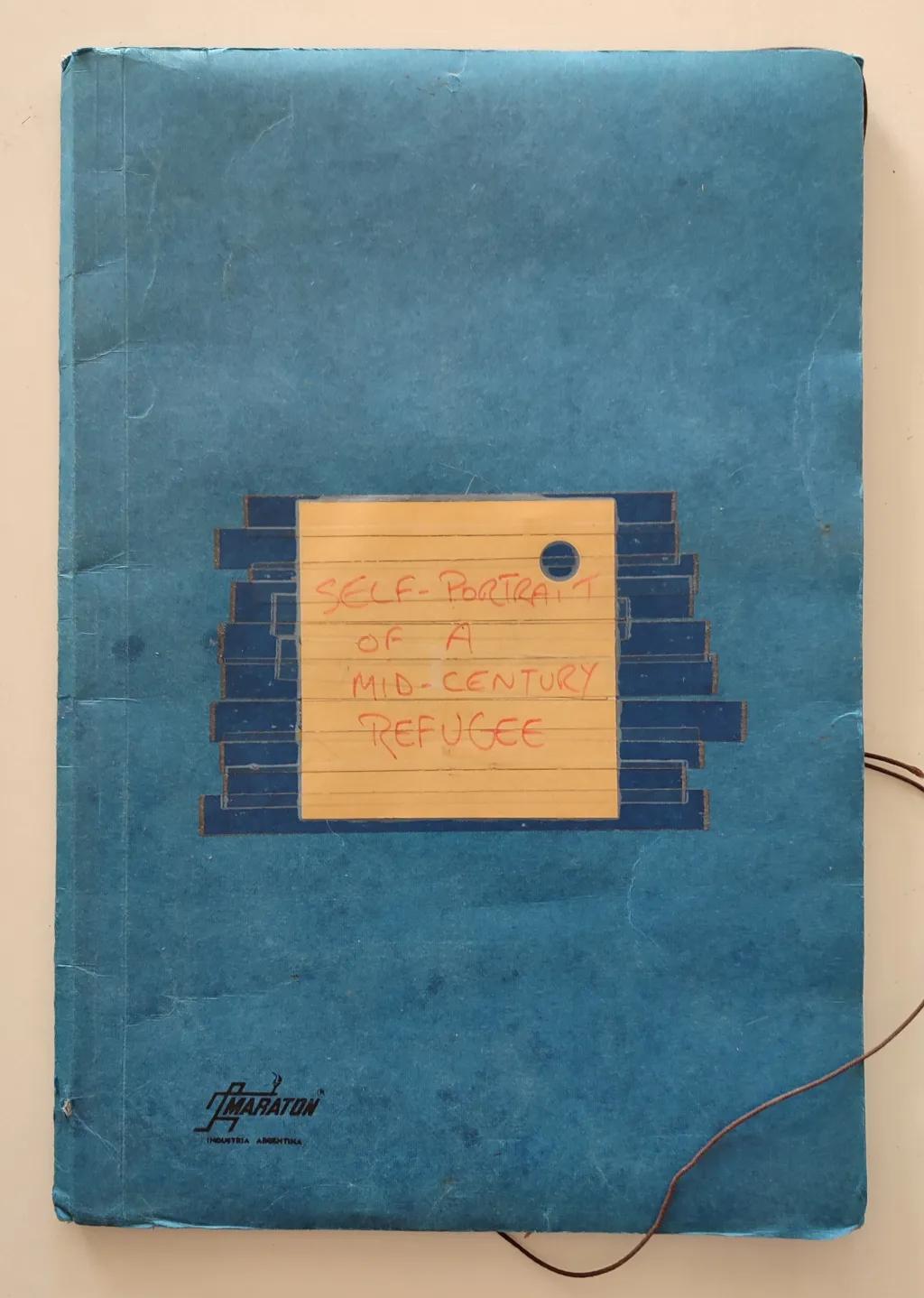
In helping us move foreward in the development of our “clear-cut premise” on the basis of our inspiration, Lajos Egri puts foreward, as mentioned above, some helpful questions to work with. On the basis of my own inspiration, I wrote down the best answers I could to these:
- What is it I want to say about this?
- Why do I even care?
- In what direction do I want this to grow, in what direction do I want to take this?
- How far do I want to carry this thing, how far do I want to go? All the way?
- What will be the final resolution of this story, to prove the point, to prove this premise?
Leading me to be capable of dealing with the Premise itself:
Who will be the Character, what will be the Conflict and what will be the Resolution (where will all this lead?)
My first approach to this, and one that still stands, (it’s been subsumed into an alternative, I’ll share both below) was:
Jewish people can achieve emancipation only through struggling for the emancipation of all peoples everywhere
based directly upon the meaning I understand that the last sentence of Marx’s 1844 work On The Jewish Question expresses:
The social emancipation of the Jew is the emancipation of society from Judaism.
Judaism is to be understood here as Judeo-Christianity, that is, here for example, “western” religion in general. A few lines above that, Marx explains:
Christianity sprang from Judaism. It has merged again in Judaism.
From the outset, the Christian was the theorizing Jew, the Jew is, therefore, the practical Christian, and the practical Christian has become a Jew again.
Christianity had only in semblance overcome real Judaism. It was too noble-minded, too spiritualistic to eliminate the crudity of practical need in any other way than by elevation to the skies.
Christianity is the sublime thought of Judaism, Judaism is the common practical application of Christianity, but this application could only become general after Christianity as a developed religion had completed theoretically the estrangement of man from himself and from nature.
Only then could Judaism achieve universal dominance and make alienated man and alienated nature into alienable, vendible objects subjected to the slavery of egoistic need and to trading.
My understanding of “application” refers to activity in the “real” (“egoistic”) world, carried out by the “practical Christian” that is, the “practical Jew”, in the marketplace and the in the professions, fulfilling real “egoistic” needs. That is, real human needs distorted via Christian Judeophobia vaunted by the regime into a despicable “self-interest”.
So, my original premise:
The social emancipation of the Jew is the emancipation of society from Judaism.
i.e. and the same for the social emancipation of any other people solemnly awarded “equal civic and religious rights” under capitalism.
While my initial premise stays completely in force, and is firmly esconced in my mind as I write, in the last couple of years an additional premise accompanies it.
It fits right into the Character + Conflict + Resolution form, and I love it, because it fills me with additional clarity and joy in writing this work.
Eldrige Cleaver was quoted in the Chicago Tribune editorial of September, 1968 as follows:
If you ain’t part of the solution, you part of the problem, you dig? There’s no more middle ground.
A wee bit longer than most of the examples Lajos Egri provides, but it’s as clear-cut as clear-cut gets in my mind:
- Character
- Conflict
- *If you ain’t part of the solution, you part of the problem,
- Midpoint (self-realization and/or class consciousness genesis moment occuring midway through the novel)
- Resolution
- There’s no more middle ground.
This fits perfectly into story development, from the backstory to the inciting incident kicking off the start of the novel, to the conflict and midpoint, and to the resolution constituting the final state arrived at, forming the spine of the entire work I am writing. This will be made clear at each Praxis Poetica step to follow in this series.
Important Note: 👉 The concept of Midpoint (of the novel) is a non-Lajos Egri concept to be covered in a later note.
Important Note: 👉 Not to be confused either with Lajos Egri’s “Every short story, novel, and play should start in the middle of the middle.” (mentioned many times in both Egri sources cited), a concept referred to also by Lisa Cron as media res. Meaning the writer should have a clear idea of the protagonist’s complete story, and start the novel in the middle where the inciting incident brings tension. So you have “backstory” + story of the work (backstory can be expressed in backflashes). Concepts to be covered in a later note.
The reason I mention Midpoint here is that “you dig” (as physical midpoint in the novel) becomes, as midpoint, a beautiful part of the premise as something that “automatically unrolls in our minds as a synopsis of the work”. I love that.
Now, need something more succinct for a premise?
Making deals forever stuck on middle ground blocks the path to liberation
is more succinct, but with
If you ain’t part of the solution, you part of the problem, you dig? There’s no more middle ground.
So,
If you have a clear-cut premise, almost automatically a synopsis unrolls itself. You elaborate on it, providing the minute details, the personal touches. —Lajos Egri, The Art of Dramatic Writing, I Premise
I really have something that comes right to mind and says it all, from start to finish, illuminating each section of the story’s cause and effect trajectory in my mind as it develops! Power!
👉 So, apart from the premise actually written down (formally expressed) in the main novel notebook (or app, or Personal Knowledge Management System (Notion, Joplin, Obsidian)), we also have, hopefully in the same place, a whole host of excitedly written rough idea notes, covering all of the above.
Next up: Three-dimensional Pivotal Character!